
- Instructor: Mohd Shahnawaz Siddiqui
- Lectures: 20
- Quizzes: 6
- Students: 1
- Duration: 12 weeks
This Advanced Diploma in Institutional Management is a professional bridge designed to transform experienced educators into strategic school leaders. While teaching focuses on the classroom, institutional management focuses on the ecosystem—the complex intersection of finance, law, human psychology, and academic standards.
- The Theoretical Foundation
Institutional Management theory is rooted in Systems Theory and Transformational Leadership.
- Systems Theory: This theory posits that a school is not just a collection of independent classrooms, but a singular organism. If the “Financial” organ fails, the “Academic” organ cannot function. Management involves ensuring all subsystems—Admissions, HR, Facilities, and Curriculum—are aligned.
- Transformational Leadership: Unlike “Transactional” management (simply checking boxes), this theory emphasizes inspiring staff and stakeholders toward a shared vision. It focuses on Strategic Foresight, where leaders use current data to predict and shape the school’s future 5 to 10 years down the line.
- Advantages of the Diploma
Pursuing this advanced qualification offers distinct benefits for the individual and the institution:
- Career Pivot: It provides the “credential shift” needed to move from a Head of Department role to a Vice Principal or Principal position.
- Risk Mitigation: By learning Educational Law and Safeguarding, administrators protect the school from costly legal battles and reputational damage.
- Fiscal Autonomy: Leaders gain the confidence to manage million-dirham budgets, ensuring that academic projects are properly funded and sustainable.
- Market Competitiveness: In a saturated educational market, an administrator who understands Admissions Funnels and Parent CRM can ensure a school remains at full capacity.
- Program Description
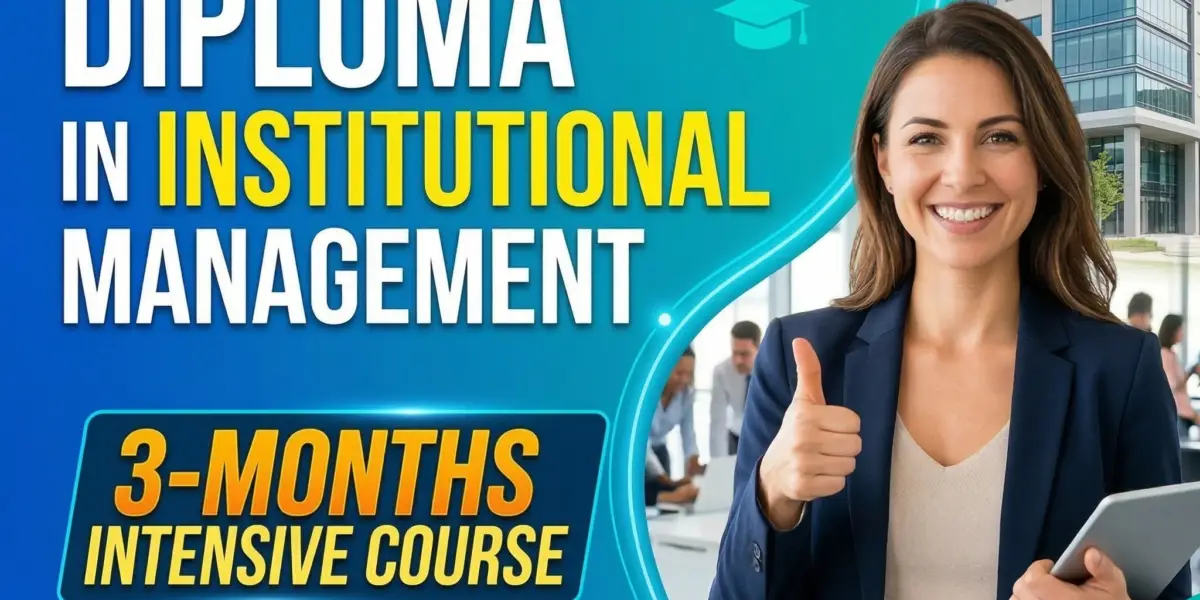
This is an intensive, 3-month mid-term diploma (900 AED) specifically tailored for the Middle Eastern and global educational landscape. It is divided into five core pillars:
- Strategic Visioning: Mastering SWOT analysis and 3-year Development Plans.
- Financial Operations: Budgeting, ROI on technology, and audit readiness.
- Human Capital: Recruitment, performance appraisal, and conflict resolution.
- Instructional Leadership: Curriculum mapping and data-driven instruction.
- Operational Compliance: Health, safety, and regulatory law.
- Proper Management: The “Golden Triangle”
Proper institutional management is achieved when a leader successfully balances three competing forces, often called the Golden Triangle of School Administration:
| Pillar | Focus Area | Goal |
| People | Staff, Parents, Students | Building a culture of trust and high performance. |
| Process | Policies, SOPs, Law | Ensuring the school runs smoothly “on autopilot.” |
| Purpose | Vision, Mission, Results | Ensuring student outcomes and school growth remain the priority. |
The Administrator’s Daily Flow Proper management requires a shift from Reactive to Proactive work. Instead of spending 100% of the day dealing with immediate crises, a professional administrator allocates time as follows:
- 60% Strategic Growth: Planning, mentoring, and data analysis.
- 30% Operational Oversight: Compliance checks and meeting with department heads.
- 10% Crisis Management: Handling unforeseen emergencies.
Advanced Diploma in Institutional Management. I have structured the curriculum into five strategic modules, each with four targeted lessons, followed by a sample of the assessment structure.
Curriculum
- 6 Sections
- 20 Lessons
- 12 Weeks
- Module 1: Strategic Leadership & School Development5
- 1.1Lesson 1.1: Crafting Vision and Mission Statements that Drive Culture5 Hours
- 1.2Lesson 1.2: SWOT Analysis—Evaluating Institutional Position5 Hours
- 1.3Lesson 1.3: Designing a 3-Year School Development Plan (SDP)5 Hours
- 1.4Lesson 1.4: Change Management—Overcoming Resistance5 Hours
- 1.5IM0013 MODULES 110 Minutes3 Questions
- Module 2: Financial Management & Resource Optimization5
- 2.1Lesson 2.1: Educational Budgeting—Revenue and Expenditure5 Hours
- 2.2Lesson 2.2: Cost-Benefit Analysis (CBA) for School Projects5 Hours
- 2.3Lesson 2.3: Financial Governance—Audit and Transparency5 Hours
- 2.4Lesson 2.4: Resource Allocation—Maximizing ROI on EdTech5 Hours
- 2.5IM0013 MODULES 25 Minutes4 Questions
- Module 3: Human Capital & Performance Systems5
- 3.1Lesson 3.1: Recruitment Strategies for High-Quality Educators5 Hours
- 3.2Lesson 3.2: Designing Effective Performance Appraisal Frameworks5 Hours
- 3.3Lesson 3.3: Conflict Resolution and Staff Motivation5 Hours
- 3.4Lesson 3.4: Continuous Professional Development (CPD) Planning5 Hours
- 3.5IM0013 MODULES 35 Minutes5 Questions
- Module 4: Curriculum Leadership & Academic Innovation5
- Module 5: Institutional Operations & Policy Compliance5
- 5.1Lesson 5.1: Health, Safety, and Safeguarding (Child Protection)5 Hours
- 5.2Lesson 5.2: Admissions and Parent Relationship Management (CRM)5 Hours
- 5.3Lesson 5.3: Educational Law and Regulatory Compliance5 Hours
- 5.4Lesson 5.4: Crisis Management and Emergency Response Planning5 Hours
- 5.5IM0013 MODULES 55 Minutes4 Questions
- Final Exam ( 40 Questions )1
Certificate

Earn a certificate and show your skills

Related Courses

Diploma in Child Care and Education of Young Children – 6 months

Prompt Engineering for Teachers (2h)

Safeguarding (5h)
Reggio Emilia (2h)

Leave feedback about this